

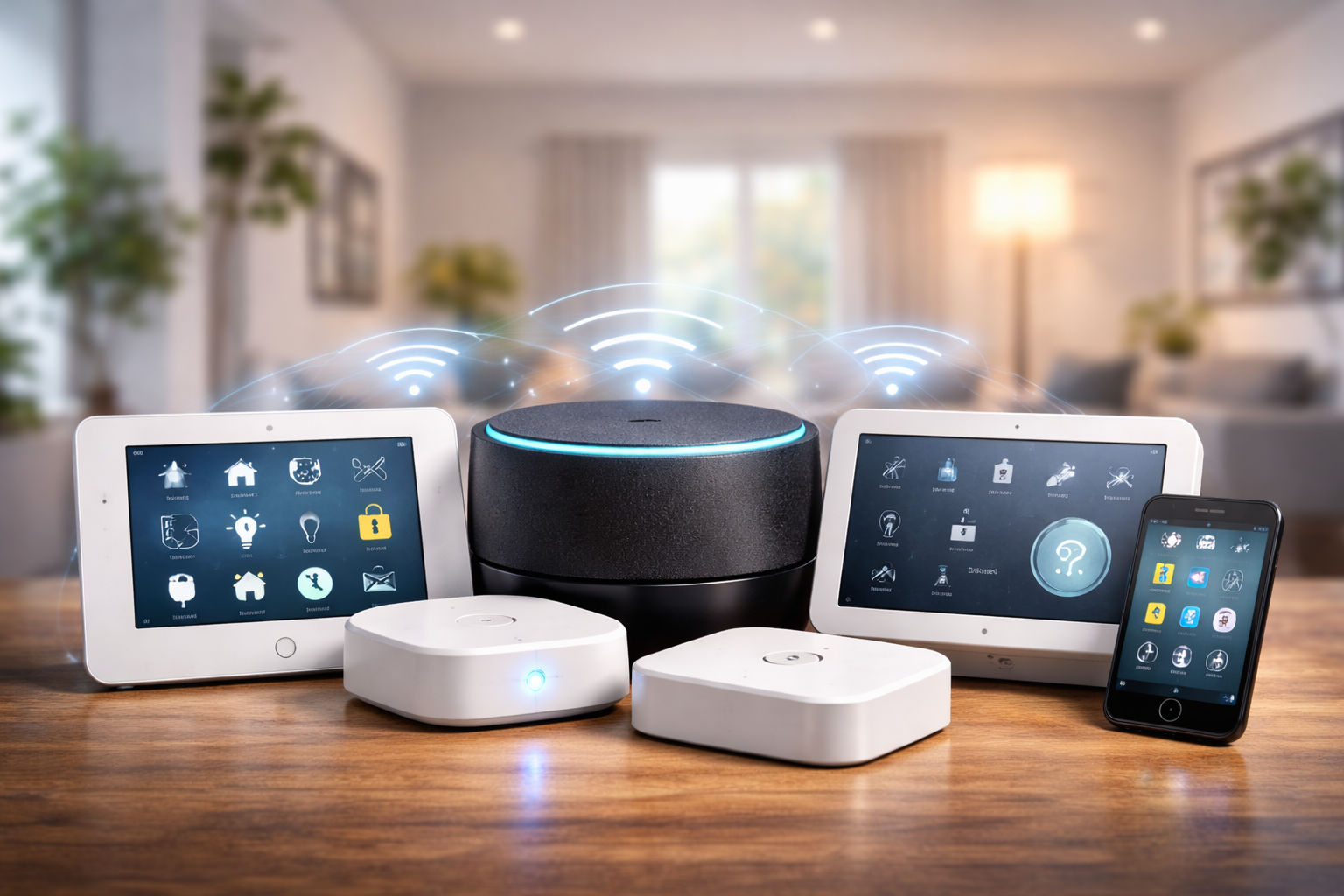
Choosing the best smart home hub is essential for creating a unified and responsive smart home ecosystem. There are various types, including dedicated protocol bridges and all-in-one controllers, and the smart home hub deliver seamless device integration and advanced automation.
A properly fitted smart home hub in 2026 enhances security, energy efficiency, and daily convenience. Designed to match modern connectivity standards like Matter and Thread, top-rated hubs offer robust performance and broad compatibility.
This guide highlights the best smart home hub to help you choose the right option for your specific home automation needs and budget.
10 best smart home hub
“Before you buy, carefully consider the primary protocols your existing or planned devices use. If you need a versatile hub for a mixed-brand ecosystem, a universal controller with Zigbee and Z-Wave is your best bet. If future-proofing and advanced automation is your top concern, invest in a premium hub with Matter and Thread support. Always double-check the product listing for your specific network requirements and confirm compatibility with your preferred voice assistant to avoid connectivity headaches.”
best smart home hub Comparison Table
| Model | Core Function | Wireless Protocols | Voice Assistant Support | Connectivity |
|---|---|---|---|---|
| AEOTEC smart home hub | Certified SmartThings Hub & Matter Controller | Z-Wave, Zigbee, Bluetooth, Wi-Fi | Amazon Alexa, Google Assistant | Ethernet (Primary), Wi-Fi (Backup) |
| Aqara smart home hub | – | – | – | Ethernet (with PoE support), Wi-Fi |
| Lutron smart home hub | – | – | – | – |
| Tapo smart home hub | – | – | – | Wi-Fi 6, Ethernet, Bluetooth |
| eufy Security smart home hub | Smart home hub and control panel | – | – | – |
| AEOTEC smart home hub | – | – | Amazon Alexa, Google Assistant | – |
| Amazon smart home hub | – | – | – | Wi-Fi 6E, Bluetooth 5.2, Matter controller, Thread border router |
| Kasa Smart smart home hub | – | – | Amazon Alexa, Google Assistant | – |
| Aqara smart home hub | – | – | Amazon Alexa, Google Assistant, Apple HomeKit/Siri | – |
| Nabu Casa smart home hub | – | – | – | Gigabit Ethernet, Wi-Fi 5, Bluetooth 5.0 |
1. AEOTEC smart home hub – Affordable Pick
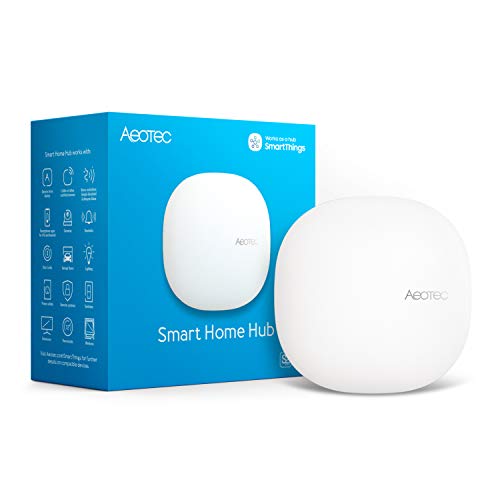
In the ever-expanding universe of smart home devices, finding a central command center that doesn't lock you into a single ecosystem is a common challenge. The Aeotec Smart Home Hub steps in as a versatile and powerful solution, designed to be the unifying brain for a diverse smart home. It's an ideal choice for tech enthusiasts and homeowners who have accumulated devices from various brands and protocols and are looking for a reliable, centralized way to manage them all without breaking the bank.
This hub distinguishes itself by acting as a certified SmartThings hub, bringing the robust SmartThings platform to your network while adding extensive local control and broad protocol support. It stands out by offering an exceptional blend of compatibility, future-proofing with Matter support, and a surprisingly accessible price point for the level of integration it provides, making advanced home automation more approachable.
Key Specifications
| Feature | Details |
|---|---|
| Core Function | Certified SmartThings Hub & Matter Controller |
| Wireless Protocols | Z-Wave, Zigbee, Bluetooth, Wi-Fi |
| Voice Assistant Support | Amazon Alexa, Google Assistant |
| Connectivity | Ethernet (Primary), Wi-Fi (Backup) |
| Processor | 1.4 GHz Quad-Core |
| Memory | 512 MB RAM, 4 GB Flash Storage |
| Power Supply | Included 5V/2A USB-C Power Adapter |
| Local Processing | Supports automations without cloud dependency |
Unified Protocol Support
The cornerstone of the Aeotec Hub's value is its exceptional support for multiple wireless communication protocols. Unlike hubs that specialize in just one, this device natively speaks Z-Wave, Zigbee, and Bluetooth, while also connecting to your Wi-Fi network. This means you can connect a Z-Wave door lock, a Zigbee light bulb, and a Bluetooth sensor to the same central hub, managing them all through a single interface. This eliminates the need for multiple proprietary bridges cluttering your network cabinet.
In real-world use, this translates to incredible flexibility when building or expanding your smart home. You're no longer limited to shopping within one protocol's ecosystem to ensure compatibility. You can choose devices based on their features, price, or reliability, knowing the Aeotec Hub will likely support them. This is particularly beneficial for those inheriting devices from previous setups or who want to leverage the specific strengths of each protocol, like Z-Wave's strong mesh network for security devices or Zigbee's efficiency for sensors.
Key highlights:
– Simultaneous support for Z-Wave, Zigbee, and Bluetooth LE
– Functions as a Matter controller for future-proof connectivity
– Reduces reliance on multiple manufacturer-specific hubs
– Enables creation of a robust, mixed-protocol mesh network
SmartThings Platform Integration
Acting as a certified SmartThings hub, this device grants you full access to the mature and feature-rich SmartThings ecosystem. The SmartThings app serves as your primary dashboard for controlling devices, creating complex automations (called "Scenes" and "Automations"), and monitoring your home's status. The platform's strength lies in its deep integration with hundreds of third-party device brands and services, offering a level of sophistication that often surpasses simpler, app-only solutions.
The practical benefit here is a powerful and user-friendly automation engine. You can create routines that trigger based on time, device status, or sensor readings. For example, you can set an automation to turn on specific lights, adjust the thermostat, and play music when your smart lock detects you arriving home after sunset. For those who want to delve deeper, the optional SmartThings Edge platform allows for local execution of these routines, making them faster and more reliable by reducing dependence on cloud servers.
Local Processing Capability
A significant advantage of this hub is its ability to process many automations locally on the device itself, rather than relying on an internet connection to the cloud. This is facilitated by its capable quad-core processor and support for SmartThings Edge drivers. When automations run locally, they execute almost instantaneously—a light turns on the moment a motion sensor triggers, not a second later after a round-trip to a server.
This local control enhances both the responsiveness and the reliability of your smart home. If your internet connection goes down, locally processed scenes and automations will continue to function, maintaining core routines like lighting schedules or security alerts. It also improves privacy, as the logic and triggering for sensitive automations (like those involving security cameras or door locks) can be contained within your home network. This feature is a major step up from cloud-dependent hubs that render your automations useless during an internet outage.
Build Quality and Connectivity
The Aeotec Hub is housed in a compact, unassuming white square that blends easily into a home entertainment center or office shelf. It feels solid and well-constructed, designed to be a set-and-forget component of your home infrastructure. Crucially, it includes both Ethernet and Wi-Fi connectivity options. The Ethernet port is the recommended and primary method of connection, providing the most stable and low-latency link to your home router, which is vital for a hub that manages your entire home.
The inclusion of Wi-Fi is a thoughtful backup and convenience feature. If running an Ethernet cable to your ideal hub location is impractical, you can connect it wirelessly. However, for the most reliable performance, especially in homes with many devices, a wired connection is superior. The hub uses a modern USB-C port for power, which is a welcome upgrade. Its small footprint and lack of obtrusive lights make it easy to place discreetly, though some users might wish for status LEDs that are a bit more informative at a glance.
Setup and Everyday Use
Setting up the Aeotec Hub is a relatively straightforward process guided by the SmartThings app. You'll connect the hub to power and your router (via Ethernet for best results), then follow the in-app prompts to add it to your SmartThings account. Adding new devices is generally simple: you put the hub into discovery mode and then follow the device's own pairing procedure. The app intuitively categorizes devices by room and type, making management clean.
For everyday use, the hub operates reliably in the background. The SmartThings app provides a capable, if occasionally complex, interface for control. The true power is unlocked through automation, where the hub excels. Its stability means you can trust it to execute daily routines without fail. The integration with Alexa and Google Assistant is seamless, allowing for robust voice control across all your connected devices. This turns the hub into a powerful voice command center, letting you control mixed-protocol devices with a single command to your preferred assistant.
Reasons to Buy
- Exceptional multi-protocol support unifies Z-Wave, Zigbee, and Bluetooth devices under one roof.
- Certified SmartThings hub provides access to a powerful, mature automation platform with extensive third-party integrations.
- Strong local processing capability makes automations faster, more reliable, and functional without internet.
- Future-proofed with Matter controller support, ensuring compatibility with the next generation of devices.
- Offers premium hub features at a very competitive price point, representing strong value.
Reasons to Avoid
- The SmartThings app, while powerful, can have a steeper learning curve compared to simpler, brand-specific apps.
- Some advanced features and local execution require optional setup with SmartThings Edge, which may intimidate casual users.
2. Aqara smart home hub – Best Value

If you're building a sophisticated smart home that needs to juggle devices from different ecosystems, the Aqara Hub M3 is a compelling central brain. It's designed for the user who has moved beyond basic voice commands and wants to create complex, reliable automations that work seamlessly. This hub doesn't just connect your gadgets; it unifies them under a single, powerful local network using the latest standards, offering a significant step up in responsiveness and reliability compared to cloud-dependent setups.
What truly sets the Aqara Hub M3 apart is its exceptional protocol support. It acts as a true multi-standard bridge, incorporating Zigbee 3.0, Thread, Bluetooth, Wi-Fi, and even infrared control into one sleek device. This, combined with its role as a certified Matter controller and border router, makes it one of the most future-proof and versatile hubs on the market. It's not just for Aqara devices; it's a foundation for a mixed-vendor smart home that prioritizes local execution and broad compatibility.
Key Specifications
| Feature | Details |
|---|---|
| Key Protocols | Zigbee 3.0, Thread, Wi-Fi, Bluetooth, IR Blaster |
| Matter Support | Certified Matter Controller and Thread Border Router |
| Connectivity | Ethernet (with PoE support), Wi-Fi |
| Platform Compatibility | Apple Home, Amazon Alexa, Google Home, SmartThings, Home Assistant, IFTTT |
| Power | 12V DC or Power over Ethernet (PoE) |
| Local Processing | Advanced automations run locally for speed and reliability |
Unified Multi-Protocol Connectivity
The core strength of the Hub M3 is its ability to speak virtually every major smart home language. Unlike hubs that lock you into a single protocol, this device integrates Zigbee 3.0 for a wide range of sensors and low-power devices, Thread for the new generation of ultra-responsive Matter accessories, and standard Wi-Fi and Bluetooth. The built-in infrared blaster is a clever bonus, allowing you to add traditional appliances like TVs and AC units to your automations. This convergence means you can choose the best device for the job, regardless of its wireless technology, and manage them all from a single point.
This approach eliminates the need for multiple dongles or hubs cluttering your network cabinet. For instance, you can have Zigbee door sensors, Thread-enabled light bulbs, and Wi-Fi cameras all communicating through the M3. It acts as a necessary border router for your Thread network, allowing those devices to connect to your home internet and other ecosystems. This makes it an ideal central node for users who value choice and are planning a long-term, evolving smart home setup.
Key highlights:
– Consolidates Zigbee, Thread, Wi-Fi, and Bluetooth management
– IR blaster brings "dumb" infrared appliances into the smart home
– Functions as a critical Thread Border Router for Matter networks
– Reduces hub clutter by supporting multiple device families
Matter Controller and Local Execution
As a certified Matter controller, the Aqara Hub M3 is ready for the industry's push towards universal compatibility. It allows you to commission and control Matter devices directly, facilitating seamless integration with other Matter-supported platforms like Apple Home, Amazon Alexa, and Google Home. More importantly, its robust local processing capabilities mean that many of your automations—like turning on lights when a sensor is triggered—happen directly on the hub itself, without needing to query the cloud.
This local execution translates to near-instantaneous response times and continued operation even if your internet connection drops. Scenarios like security routines or lighting schedules remain active, providing crucial reliability. For power users who create intricate automation chains involving conditions, delays, and multiple devices, the M3's processing power ensures these sequences run smoothly and dependably, offering a noticeably more robust experience than hubs that offload all logic to the cloud.
Broad Ecosystem Integration
The Hub M3 refuses to be locked into a walled garden. While it serves as the heart of the Aqara ecosystem, its true value shines in its ability to connect outwards. It natively supports major platforms including Apple HomeKit (via Matter), Amazon Alexa, Google Home, and Samsung SmartThings. This means you can use your preferred voice assistant or ecosystem app to control devices connected through the M3. Furthermore, its open approach extends to platforms like Home Assistant and IFTTT, unlocking virtually limitless automation possibilities for DIY enthusiasts.
This level of integration is a boon for households with mixed device preferences. One person might prefer using Siri and the Apple Home app, while another uses Alexa routines. The M3 allows all these interfaces to control the same underlying devices and automations. It effectively decouples your device network from your control interface, giving you the freedom to change or use multiple front-ends without rebuilding your entire smart home infrastructure.
Professional-Grade Design and Connectivity
The Hub M3 sports a minimalist, desk-friendly design, but its connectivity options are decidedly professional. The inclusion of a standard Ethernet port is expected, but the support for Power over Ethernet (PoE) is a standout feature for advanced setups. This allows you to power the hub and provide its network connection through a single Ethernet cable, enabling clean, flexible placement—like mounting it on a wall or ceiling—without needing a nearby power outlet. This is a thoughtful addition for users with structured home networking.
Build quality feels solid, and the device remains cool and quiet during operation. The wired Ethernet connection ensures a stable, low-latency backbone for your smart home network, which is far more reliable than a Wi-Fi connection for a critical hub. This focus on stable, wired connectivity underscores the product's aim at users who prioritize reliability and are building a more permanent, robust smart home foundation.
Advanced Automation Engine
Beyond simple connectivity, the Aqara Hub M3 is a powerful automation engine. Through the Aqara app (or integrated platforms like Home Assistant), you can create highly complex scenes and automations. These can be based on a vast array of triggers from supported sensors—like motion, vibration, temperature, and door contact—and can execute multi-step actions across different device types and protocols. The logic supports conditions, delays, and custom conversions, allowing for sophisticated "if this, then that" routines.
The benefit is a truly intelligent home that reacts to your life. You can create an automation that, when a motion sensor detects movement after sunset, it turns on specific Thread lights at 30% brightness, but only if the temperature sensor reads below a certain value, and then sends a notification to your phone. This depth of control moves beyond basic app or voice control, allowing the home itself to become context-aware and proactive, which is the ultimate goal for many smart home enthusiasts.
Reasons to Buy
- Unmatched protocol support (Zigbee, Thread, Wi-Fi, Bluetooth, IR) in a single hub eliminates the need for multiple bridges.
- Certified Matter controller and Thread border router ensures future-proof compatibility with the new universal standard.
- Powerful local processing enables fast, reliable automations that work even during internet outages.
- Exceptional cross-platform compatibility works seamlessly with Apple Home, Alexa, Google Home, and SmartThings.
- Professional features like Power over Ethernet (PoE) support allow for flexible and clean installation.
Reasons to Avoid
- The Aqara app interface, while powerful, can have a learning curve for users new to advanced automation logic.
- Some advanced features and integrations may require technical knowledge or third-party platforms like Home Assistant to fully unlock.
3. Lutron smart home hub – Premium Choice
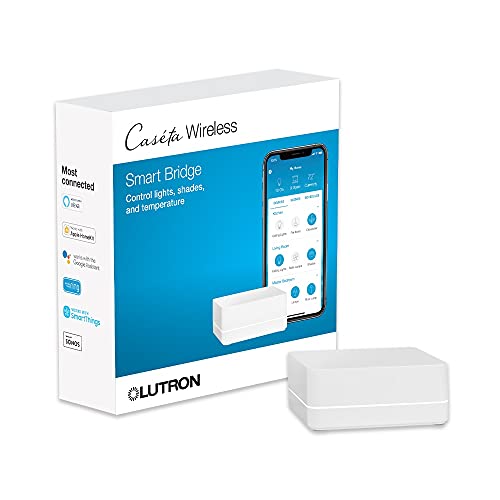
If you're looking to build a robust and dependable smart lighting ecosystem that just works, the Lutron Caseta Smart Hub deserves your serious attention. Designed for homeowners who prioritize reliability over flashy gimmicks, this hub serves as the central command center for Lutron's extensive line of Caseta dimmers, switches, plugs, and shades. It’s particularly well-suited for those already invested in or planning a comprehensive lighting control system, offering a level of stability and integration that is often missing from more budget-oriented options.
What sets the Lutron Caseta system apart is its proprietary Clear Connect RF technology, which operates on a different frequency than your Wi-Fi. This dedicated wireless protocol translates to exceptional reliability, near-instantaneous response times, and a strong, interference-free connection throughout your home. While it primarily controls Lutron's own devices, its broad compatibility with Amazon Alexa, Apple HomeKit, and Google Home means it can still play nicely within a larger smart home, acting as a rock-solid foundation for your lighting.
Key Specifications
| Feature | Details |
|---|---|
| Compatibility | Amazon Alexa, Apple HomeKit, Google Home, Samsung SmartThings |
| Device Capacity | Supports up to 75 Lutron Caseta devices |
| Wireless Technology | Lutron Clear Connect RF (proprietary, non-Wi-Fi) |
| Power Source | Plug-in via included power adapter |
| Included Components | Smart Hub, 1 Lutron Caseta Smart Dimmer Switch |
| Installation | Professional or DIY; no neutral wire required for many switches |
| Warranty | 5-year limited warranty |
Unmatched System Reliability and Responsiveness
The cornerstone of the Lutron Caseta experience is its legendary reliability, powered by the proprietary Clear Connect RF technology. Unlike many smart home devices that clog your Wi-Fi network, the Caseta hub creates its own dedicated wireless mesh network specifically for lighting control. In daily use, this means commands from your phone, voice assistant, or scheduled automations are executed instantly and consistently. Lights turn on or dim without the frustrating lag or missed commands that can plague Wi-Fi-based systems, providing a seamless and polished smart home experience.
This dedicated network is also far less susceptible to interference from other wireless devices like routers, microwaves, or Bluetooth speakers. It ensures a strong, stable connection even over longer distances and through walls, making it ideal for larger homes. The benefit is a system you can truly set and forget; once your devices are paired and routines are set, they simply work, day in and day out, without requiring troubleshooting or reboots.
Key highlights:
– Proprietary Clear Connect RF technology avoids Wi-Fi congestion.
ivers near-instantaneous response to all commands and automations.
– Creates a stable, interference-resistant network for up to 75 devices.
Broad Ecosystem Compatibility and Integration
While the Lutron Caseta hub is the heart of a Lutron-specific ecosystem, it is by no means an isolated island. It boasts excellent integration with all three major voice assistant platforms: Amazon Alexa, Apple HomeKit, and Google Home. This means you can use voice commands through your preferred assistant to control lights, set scenes, or check status without needing additional hardware. The setup process for each is straightforward through the Lutron app, and the connections remain remarkably stable over time.
Beyond voice control, the hub also connects with other smart home platforms like Samsung SmartThings, enabling more complex automations that tie lighting to sensors, locks, or other devices. For Apple users, the native HomeKit support is a significant advantage, allowing for secure remote access and advanced automation creation directly in the Apple Home app. This wide-ranging compatibility ensures that the Lutron Caseta hub can serve as a specialized, high-performance component within a broader, multi-brand smart home.
Professional-Grade Device Support and Capacity
With a capacity for 75 devices, this hub is built to handle whole-home lighting automation. It supports the full Lutron Caseta lineup, including dimmers and switches for lights and fans, plug-in lamp modules, Serena smart shades, and temperature sensors. A key practical benefit is that many Caseta dimmers and switches do not require a neutral wire, a common hurdle in older homes that makes installation possible for a much wider range of properties without expensive electrical rewiring.
The included Lutron app provides fine-grained control over each device. You can set exact light levels, create customized "scenes" (like "Movie Night" or "Good Morning") that adjust multiple lights at once, and establish sophisticated schedules based on time of day or sunrise/sunset. This level of control, combined with the high device limit, makes the system powerful enough for complex lighting designs while remaining accessible for DIY enthusiasts through its clear app guidance.
Streamlined Setup and User-Friendly App
Lutron has refined the setup process to be as painless as possible. You plug in the hub, download the Lutron app, and follow the step-by-step instructions to connect it to your home network and pair your first device (a smart dimmer is included in the kit). The app intuitively guides you through naming rooms, assigning devices, and connecting to your preferred voice assistants. The overall user experience is polished and focused on core functionality rather than unnecessary complexity.
The app itself is clean and responsive. The main dashboard provides quick access to all rooms and scenes, while deeper menus allow for schedule creation and device-specific settings. While it may lack some of the visual flair of other platforms, its strength lies in its speed and reliability—it opens quickly and controls without delay, which is ultimately what matters you're trying to turn off lights on your way to bed.
Long-Term Value and Support
Investing in the Lutron Caseta system is a long-term decision backed by strong company support. Lutron is a established leader in lighting control, not a startup, which provides confidence in the longevity of the product line and its software support. The hub and devices come with a substantial 5-year warranty, far exceeding the typical 1-2 years offered by many consumer electronics companies. This reflects the company's confidence in the durability and performance of its hardware.
Over time, this translates to a lower total cost of ownership and less worry about obsolescence. Lutron regularly updates its app and maintains its compatibility with major platforms, ensuring your system remains functional and integrated as the smart home landscape evolves. For users who want a "install it once and forget it" solution that will perform reliably for years, this proven ecosystem and strong support structure are major advantages.
Reasons to Buy
- Exceptional reliability and instant response due to dedicated Clear Connect RF technology.
- Broad compatibility with Alexa, HomeKit, and Google Home for flexible voice control.
- High 75-device capacity and support for fans/shades enables whole-home automation.
- Many switches require no neutral wire, simplifying installation in older homes.
- Backed by a 5-year warranty and the support of an established industry leader.
Reasons to Avoid
- Primarily controls Lutron-branded devices, limiting direct compatibility with other brands' bulbs or switches.
- The initial cost for the hub and Lutron switches/dimmers is higher than some Wi-Fi-based alternatives.
4. Tapo smart home hub – Budget Friendly

If you're building a smart home ecosystem on a budget, particularly one centered around security cameras and sensors, the Tapo H500 Smart Home Central Hub presents a compelling central nervous system. Designed to work seamlessly with Tapo's own extensive range of cameras and Sub-G sensors, this hub consolidates control, enhances local processing, and offers a surprisingly flexible storage solution. It's aimed at users who want to move beyond standalone Wi-Fi cameras to a more integrated, reliable, and feature-rich system without paying a premium for brand-name alternatives.
The Tapo H500 stands out by offering substantial local storage right out of the box and the unique ability to expand it further with a standard 2.5-inch SATA drive. This focus on local data management, combined with its capacity to support a significant number of devices, makes it a powerful value proposition for expanding your smart home security and automation setup.
Key Specifications
| Feature | Details |
|---|---|
| Supported Devices | Connects up to 16 Tapo Cameras & 64 Sub-G Sensors |
| Built | in Storage: 16GB eMMC |
| Expandable Storage | 2.5-inch SATA bay (drive not included) |
| Connectivity | Wi-Fi 6, Ethernet, Bluetooth |
| AI Processing | On-device AI for improved camera accuracy |
| Power | 12V/1.5A DC input |
Local Storage and Expandability
The Tapo H500's most significant feature is its robust approach to storage. Unlike many hubs that rely solely on cloud subscriptions or minimal internal memory, this device includes 16GB of built-in eMMC storage. This is sufficient for storing event-triggered clips from several cameras for a reasonable period. More impressively, it features a dedicated bay for a standard 2.5-inch SATA hard drive or SSD, allowing you to inexpensively add terabytes of storage for continuous recording or extended video history.
This hybrid storage model offers the best of both worlds: quick, reliable internal storage for critical alerts and AI processing, plus massive, user-controlled expansion for peace of mind. It fundamentally changes the economics of a multi-camera setup by eliminating mandatory monthly cloud fees for basic recording. Users with a large number of cameras or those who prefer to keep all footage locally and privately will benefit most from this architecture.
Key highlights:
– 16GB of built-in storage handles event clips and AI data.
– SATA bay supports affordable, widely available 2.5" drives for massive expansion.
– Enables continuous recording without ongoing cloud costs.
– Keeps sensitive video data entirely within your home network.
Device Capacity and System Integration
For a budget-friendly hub, the Tapo H500 supports an impressive scale. The ability to connect up to 16 Tapo cameras and 64 Sub-G sensors means it can form the backbone of a comprehensive home security system covering doors, windows, motion, and more, all from a single point of control. This high device limit future-proofs your investment, allowing you to start small and add components over time without needing to upgrade the central hub.
Integration happens through the unified Tapo app, which brings all connected cameras, sensors, and compatible smart devices into one interface. This centralized control simplifies daily management, automations, and monitoring. Instead of juggling multiple apps for different cameras and sensors, you get a cohesive view and control panel for your entire Tapo ecosystem, which is a major quality-of-life improvement for any smart home user.
On-Device AI Processing
The H500 isn't just a passive relay; it actively processes data to improve your system's intelligence. By performing AI analysis on the hub itself—using its built-in storage and processing power—it enhances the accuracy of connected Tapo cameras. This typically translates to better differentiation between people, pets, and vehicles, and fewer false alerts from things like moving shadows or rustling leaves.
This local AI processing has practical benefits beyond accuracy. Because the analysis happens in your home response time for alerts can be faster than waiting for video to be uploaded to the cloud, analyzed, and then sending a notification back. It also reduces some bandwidth usage, as only the relevant alert clips may need to be uploaded if you use cloud backup, while raw video stays local.
Connectivity and Installation
The hub offers versatile connectivity options to suit different home setups. It supports both Wi-Fi 6 and Gigabit Ethernet, giving you the choice between wireless convenience or a more stable, high-bandwidth wired connection, which is preferable for a hub managing multiple high-definition video streams. The inclusion of Bluetooth aids in the initial pairing and setup process for new devices.
Installation is designed to be user-friendly. The physical process involves connecting power and your network cable (if using Ethernet), then following the guided setup in the Tapo app. Mounting the hub is straightforward, with keyhole slots on the back. The most technical step for some users will be installing a SATA drive into the bay, which is a simple tool-less process similar to installing a drive in a laptop.
Value and Ecosystem Lock-in
The Tapo H500 delivers exceptional value by bundling local storage, high device capacity, and AI features at a price point well below many competing ecosystem hubs. It makes a multi-camera security system economically viable by removing recurring cloud fees as a requirement for basic functionality. The hardware itself feels solid and capable for its class.
However, it's important to understand that this value is intrinsically linked to the Tapo ecosystem. The hub is designed exclusively to work with Tapo-branded cameras and Sub-G sensors. This creates a seamless and optimized experience within that walled garden but means you cannot use it as a universal hub for cameras from other brands like Google, Ring, or Arlo. Your investment is in the Tapo platform.
Reasons to Buy
- Exceptional value with built-in and expandable local storage, eliminating mandatory cloud fees.
- High device capacity supports building a large, comprehensive security system.
- On-device AI processing improves camera alert accuracy and can speed up notifications.
- Flexible connectivity with both Wi-Fi 6 and Ethernet options.
- Unified control of all Tapo cameras and sensors in a single, user-friendly app.
Reasons to Avoid
- Exclusively works with Tapo devices, creating ecosystem lock-in.
- Advanced features and full system potential require a commitment to the Tapo product line.
5. eufy Security smart home hub – Top Performer

The eufy Smart Display E10 emerges as a compelling central command station for those looking to streamline their smart home ecosystem. Designed to go beyond a simple voice assistant screen, it integrates deeply with eufy's security products while offering broad compatibility with other smart devices. It's an ideal solution for homeowners who want a unified, visual interface to manage security cameras, smart lights, locks, and more from a single, dedicated panel mounted in a central location.
What sets the E10 apart is its focus on multi-view monitoring and proactive alerts, positioning it as much a security dashboard as a smart home controller. Instead of juggling multiple apps on your phone, this 8-inch display provides an at-a-glance overview of your home, making it particularly valuable for families or individuals who prioritize both convenience and security. Its wall-mountable design encourages permanent placement, turning home automation from a phone-based task into a seamless part of your daily environment.
Key Specifications
| Feature | Details |
|---|---|
| Display Size | 8-inch touchscreen |
| Core Function | Smart home hub and control panel |
| Key Feature | Four simultaneous camera views on one screen |
| Alerts | Instant door alerts and daily event summaries |
| Control | One-tap quick actions for scenes and devices |
| Compatibility | Works with eufy security devices and popular smart home brands |
Multi-View Security Dashboard
The standout feature of the E10 is its ability to display live feeds from four different cameras simultaneously on one screen. This transforms the device from a simple controller into a powerful security monitoring station. In practice, you can have a panoramic view of your front yard, driveway, living room, and back door all at once, eliminating the need to cycle through individual camera feeds. The screen real estate is used efficiently, with each quadrant providing a clear, real-time image that's large enough to identify activity.
This layout is especially beneficial during busy times, like mornings or evenings, when you want a comprehensive snapshot of your home's status. It also proves invaluable for monitoring multiple entry points when expecting deliveries or guests. The system prioritizes feeds from eufy cameras but is designed to integrate other compatible camera brands, aiming for a unified view.
Key highlights:
– Simultaneous viewing of four camera feeds eliminates app switching
– Provides an immediate, comprehensive security overview
– Ideal for monitoring high-traffic areas or multiple entry points
Proactive Alert System
Moving beyond passive monitoring, the E10 delivers intelligent, proactive alerts designed to keep you informed without overwhelming you. The "Instant Door Alerts" feature detects when a connected door sensor is triggered or a compatible camera identifies a person, and it immediately displays a live feed from that camera on the screen. This gives you visual confirmation of who is at the door or what caused the motion, far more useful than a generic notification on your phone.
Furthermore, the "Daily Event Reports" compile a digest of significant events from your connected devices. Instead of sifting through hours of uneventful footage or dozens of minor notifications, you receive a curated summary. This feature learns to highlight potentially important activity, like repeated door events or unfamiliar faces, helping you stay on top of your home's activity patterns with minimal effort.
Centralized Device Control
As a true smart home hub, the E10 excels at bringing control of disparate devices into one intuitive interface. The touchscreen allows you to adjust smart thermostats, turn light groups on or off, lock smart doors, and activate pre-configured scenes like "Good Morning" or "Away" with a single tap. This physical, centralized control is a significant quality-of-life improvement over pulling out your phone and opening multiple apps, especially for non-technical family members or guests.
The interface is designed for simplicity, with large, clear icons and a logical layout. You can create custom panels for different times of day or specific needs, such as a "Bedtime" panel that turns off all downstairs lights and arms the security system. This level of integration and ease of use makes complex smart home routines accessible and reliable daily use rather than occasionalinkering.
Wall-Mounted Design and Usability
The E10 is designed for permanent placement, featuring a sleek, low-profile form factor meant to be wall-mounted in a kitchen, entryway, or home office. This intentional design choice integrates the smart home hub into your living space as a fixture, not a portable gadget. Always being in the same, accessible location reinforces its role as a home command center, where anyone can quickly check cameras or adjust the thermostat without searching for a tablet.
The 8-inch screen size strikes a balance between being large enough for clear multi-view feeds and compact enough to fit in most spaces without being obtrusive. The touch responsiveness is tuned for quick interactions, and the adjustable brightness ensures it's visible in various lighting conditions without being a glaring distraction at night. This focus on ergonomics and placement is key to its success as a daily-use appliance.
Ecosystem Integration and Compatibility
While the E10 shines within the eufy security ecosystem, its value increases with its ability to connect with a wider range of smart home products. It supports major standards and popular brands for lights, plugs, locks, and sensors. This means you can start with eufy cameras and door sensors and gradually expand your system with devices from other manufacturers you may already own, all controllable from the same panel.
The setup process is guided, helping you connect compatible devices through their respective cloud services or direct protocols. For users heavily invested in the eufy ecosystem, the integration is seamless and feature-rich. For those with a mixed-brand home, it offers a capable unifying layer that reduces app fatigue. This balance between deep native integration and broad third-party support makes it a versatile choice for various smart home maturity levels.
Reasons to Buy
- The four-camera simultaneous view offers unparalleled at-a-glance home monitoring.
- Proactive door alerts with live video provide immediate, useful context for security events.
- Wall-mounted design encourages constant use as a true central command station.
- One-tap control for scenes and devices simplifies daily routines for the whole household.
- Strong integration with eufy security products while maintaining good third-party compatibility.
Reasons to Avoid
- Its full potential is best realized with multiple eufy security cameras, which is an additional investment.
- As a wall-mounted device, it lacks the portability of a tablet or phone for controlling devices from other rooms.
6. AEOTEC smart home hub – Recommended
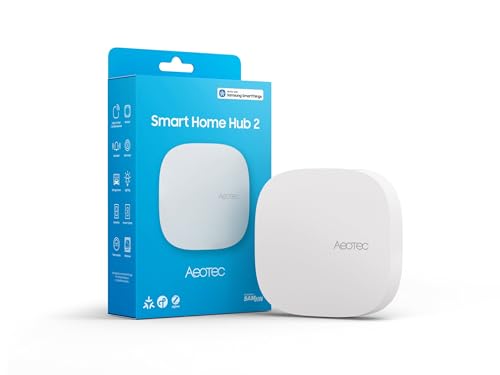
If you're looking to build a unified, powerful smart home ecosystem without being locked into a single brand, the Aeotec Smart Home Hub 2 V4 is a compelling central command center. Designed to replace and succeed the popular Samsung SmartThings Hub, this device acts as the brain for your connected devices, bringing together products that use different communication protocols like Zigbee and Matter over Thread. It's ideal for tech-savvy users and DIY home automators who want extensive compatibility and deep customization options beyond what basic voice assistant ecosystems offer.
What sets this hub apart is its role as the official continuation of the SmartThings platform, offering local processing for faster, more reliable automations and a future-proof gateway for the emerging Matter standard. It provides a robust, app-based platform for creating complex routines, scenes, and automations that can work even if your internet goes down, making your smart home more resilient and responsive. For anyone invested in or planning a multi-brand smart home, this hub is a foundational piece.
Key Specifications
| Feature | Details |
|---|---|
| Connectivity Protocols | Zigbee 3.0, Matter (via Thread Border Router), Wi-Fi, Bluetooth |
| Voice Assistant Support | Amazon Alexa, Google Assistant |
| Platform | SmartThings (Web and Mobile App) |
| Processing | Local execution for supported automations |
| Power | 5V/2A USB power adapter |
Unified Device Compatibility and Platform
The core strength of the Aeotec Hub 2 is its ability to unify hundreds of devices from different manufacturers under a single, powerful platform—SmartThings. It directly connects to Zigbee devices (like sensors, bulbs, and locks) and acts as a Thread Border Router for Matter devices, allowing you to integrate products that support this new universal standard. This means you can mix and match brands like Philips Hue, Aqara, Eve, and many others, controlling them all from the SmartThings app instead of juggling multiple proprietary apps.
This integration goes beyond simple on/off commands. The SmartThings platform allows for deep interaction, letting you use a door sensor from one brand to trigger a light from another, or create automation routines that combine climate, lighting, and security devices seamlessly. The hub's official lineage as a SmartThings hub ensures full access to the platform's features, including custom automations built with the web-based "SmartThings IDE" for advanced users. It's perfect for those who want their smart home to be an interconnected system, not a collection of isolated gadgets.
Key highlights:
– Serves as the official hub for the extensive SmartThings ecosystem.
– Bridges Zigbee and Matter/Thread devices into one cohesive network.
– Enables complex, cross-brand automations and routines not possible with voice assistants alone.
– Provides a stable platform with a proven track record and active community support.
Local Processing and Reliability
A significant upgrade offered by this hub is local processing for supported automations and scenes. Unlike setups that rely solely on cloud servers (like many basic Alexa or Google Home routines), the Aeotec Hub can execute certain commands directly within your home network. This means that crucial automations, like turning on lights when a motion sensor is triggered, happen almost instantaneously because the command doesn't need to travel to the internet and back. More importantly, these local automations continue to work even if your home internet connection fails.
This local execution enhances both the speed and reliability of your smart home. Scenes that control multiple lights respond snappily, and security-related automations gain an extra layer of dependability. It's important to note that not every automation or device interaction can be processed locally—some still require the cloud—but the list of locally supported devices and routines within the SmartThings ecosystem is substantial and growing. This feature is a major benefit for users who prioritize a responsive and resilient smart home.
Future-Proofing with Matter Support
As the smart home industry converges around the Matter standard, having a hub that supports it is crucial for longevity. The Aeotec Hub 2 functions as a Thread Border Router, which is the essential component needed to connect and communicate with Matter-over-Thread devices. This prepares your smart home foundation for the influx of new and existing devices that will be updated or released with Matter compatibility, promising easier setup and improved interoperability between different brands.
While Matter's full potential is still unfolding, investing in this hub means you're building on a platform that is committed to the standard. It allows you to incorporate Matter devices alongside your existing Zigbee gear, all managed through SmartThings. For early adopters and those planning long-term smart home investments, this forward-looking capability helps protect against obsolescence and ensures your central hub will remain relevant as more manufacturers join the Matter ecosystem.
Setup and SmartThings Ecosystem
Setting up the Aeotec Hub 2 is straightforward for anyone familiar with network hardware. It requires a wired Ethernet connection to your router and power via the included USB adapter. The initial configuration is done through the SmartThings app, which guides you through connecting the hub to your Wi-Fi network (for communication with the cloud services and your phone) and then adding your various devices. The app is well-organized, offering distinct sections for devices, scenes, and automations, making it relatively easy to build a complex setup.
The true power, however, lies in the depth of the SmartThings ecosystem. Beyond the app, there's a web-based interface called the SmartThings IDE for creating highly customized automations with more granular logic. There's also a vast library of user-created "SmartApps" and device handlers that can extend functionality to unsupported devices or create unique automation sequences. This balance between user-friendly app control for everyday use and powerful, programmable tools for enthusiasts makes the platform incredibly versatile.
Design and Connectivity Considerations
The hub itself is a compact, unassuming black box that can be easily tucked away near your router. Its design is purely functional, which is appropriate for a device meant to be set up once and forgotten. The most critical connectivity note is its reliance on a wired Ethernet connection for backbone stability; it does not connect to your router via Wi-Fi. This ensures a reliable, low-latency link for all your smart home communications but requires an available Ethernet port and some cable management.
A notable specification is that this V4 model of the Aeotec Hub 2 does not include a built-in Z-Wave radio. This is a conscious choice reflecting the industry shift towards Matter and Thread, but it's a vital consideration for users with existing Z-Wave devices. You would need to purchase a separate Z-Wave dongle or stick if you wish to incorporate Z-Wave devices into this system. For new builds focusing on Zigbee and Matter, this isn't an issue, but it's a key point for those transitioning from an older smart home setup.
Reasons to Buy
- Serves as a powerful, unified brain for a multi-brand smart home, bringing Zigbee and Matter devices into one system.
- Local processing capability makes automations faster and keeps them running during internet outages.
- The SmartThings platform offers exceptional depth for automation, with both user-friendly app controls and advanced web tools for customization.
- Future-proofed with Thread Border Router functionality for seamless integration with the growing Matter standard.
- Acts as the official continuation of the popular Samsung SmartThings Hub, ensuring strong platform support and updates.
Reasons to Avoid
- Lacks a built-in Z-Wave radio, which may require an additional purchase for users with existing Z-Wave devices or who prefer that protocol.
- Requires a wired Ethernet connection, which might limit placement options compared to Wi-Fi-only hubs.
- The SmartThings platform, while powerful, has a steeper learning curve for complex automations than simpler voice-assistant-based systems.
7. Amazon smart home hub – Recommended

If you've ever felt overwhelmed juggling multiple smart home apps or wished for a more intuitive way to control your connected devices, the Amazon Echo Hub presents a compelling solution. This isn't just another smart speaker with a screen; it's a dedicated command center designed to unify your smart home ecosystem. It’s ideal for homeowners who have invested in a variety of smart lights, locks, cameras, and plugs and want a streamlined, wall-mounted touchpoint for managing everything.
The Echo Hub stands out by offering a purpose-built interface that prioritizes smart home control above all else. While it can play videos and music, its core strength lies in transforming complex routines and scattered device controls into a simple, visual, and tactile experience. For families or individuals deeply embedded in the Alexa ecosystem, it reduces friction and makes the smart home genuinely feel smarter and more accessible.
Key Specifications
| Feature | Details |
|---|---|
| Screen | 8-inch HD touchscreen with adaptive color |
| Processor | AZ2 Neural Edge processor |
| Audio | Built-in speaker with far-field microphones |
| Connectivity | Wi-Fi 6E, Bluetooth 5.2, Matter controller, Thread border router |
| Smart Home Support | Works with Alexa, Zigbee, Matter, Thread, and thousands of brands |
| Mounting | Included wall mount and tabletop stand |
| Voice Assistant | Alexa with enhanced visual responses |
Unified Smart Home Dashboard
The Echo Hub’s primary advantage is its cohesive, customizable dashboard. Unlike using a phone app or a standard Echo Show, the interface is meticulously organized for control at a glance. You can create distinct panels for different rooms, scenes, or times of day. For instance, a "Good Morning" panel might show the weather, your calendar, and one-touch buttons to turn on lights and start the coffee maker, while an "Evening" panel could focus on security cameras and lighting scenes. The visual layout is intuitive, reducing the need to dig through menus or remember specific voice commands.
This centralized approach shines in multi-device homes. You can see the status of all your compatible devices—from door locks and thermostats to robot vacuums and lights—on a single screen. The Hub acts as a universal remote, but one that’s proactive and context-aware. The integration is so seamless that it often feels like you’re controlling a single, integrated system rather than a collection of individual gadgets from different manufacturers.
Key highlights:
– Fully customizable widgets and panels for personalized control
– Room-by-room organization with quick-access device grids
– Live feeds from compatible security cameras displayed directly on the dashboard
– Visual status indicators for all connected devices (on/off, locked, temperature, etc.)
Wall-Mounted Design and Interface
Designed from the ground up to be mounted on a wall, the Echo Hub fills a unique niche. Its sleek, flat-profile design looks built-in, like a modern thermostat or light switch panel, making it a natural fit in high-traffic areas like the kitchen, hallway, or living room entrance. The included mount makes installation straightforward, and the power cable can be neatly routed through the wall for a clean look. This permanent placement encourages constant, casual interaction—a quick tap to turn off all lights as you leave is far more convenient than pulling out yourThe touchscreen interface is optimized for this use case. Buttons and controls are large and easy to press, even with a quick glance. The screen automatically adjusts its color temperature and brightness based on the room's lighting, ensuring it's always readable without being glaring at night. While it can be used on a tabletop with the included stand, its true potential is unlocked when it becomes a fixed part of your home's infrastructure, always ready and in the same place.
Expanded Connectivity and Compatibility
At its heart, the Echo Hub is a powerful connectivity hub. It goes beyond just being a Wi-Fi endpoint by including a built-in Matter controller and Thread border router. This future-proofs your smart home, allowing the Hub to communicate directly with the latest generation of devices that use these new, open standards. It also retains native Zigbee support, meaning it can connect to a vast array of existing devices without requiring their proprietary hubs, helping to reduce clutter.
This wide compatibility is a major strength. Whether your devices are from Philips Hue, Ring, Ecobee, or hundreds of other supported brands, the Echo Hub can likely bring them under one roof. The setup process for Matter and Thread devices is notably simplified, often involving just a scan of a QR code. For users looking to build a robust, multi-brand smart home without being locked into a single ecosystem, the Hub’s agnostic approach is a significant benefit.
Enhanced Visual Alexa Experience
While voice control remains a key feature, the Echo Hub enhances Alexa with rich visual feedback. Asking for the weather brings up a detailed forecast with radar maps. Inquiring about your calendar displays your agenda. Requesting a recipe shows it step-by-step on the screen. This visual layer makes interactions more informative and engaging. The AZ2 processor also enables on-device processing for some requests, making responses like turning off lights feel instantaneous.
This is particularly useful for smart home management. Saying "Alexa, show me the front door" will pull up the live camera feed. You can visually confirm which lights are on before turning them off. For routines that involve multiple actions, you can see them execute on screen. It bridges the gap between the abstract nature of voice commands and the concrete need for visual confirmation, building greater trust and control in your automated home.
Everyday Utility and Family Features
Beyond pure smart home control, the Echo Hub integrates useful features that make it a valuable family hub. It can function as a digital photo frame, displaying albums from Amazon Photos or your linked social media accounts. It supports video calling via Alexa, Zoom, and others, turning it into a convenient communications center. For the kitchen, it can follow along with step-by-step recipes or set visual timers. These features ensure the device provides value even when you're not actively managing your smart devices.
The inclusion of a built-in speaker and far-field microphones means it retains all the capabilities of a standard Echo Show. You can stream music, podcasts, or watch video content. However, its 8-inch screen and speaker are adequate rather than exceptional for media consumption, which is appropriate given its primary role as a control panel. It’s a capable multi-role device that doesn’t sacrifice its core functionality for these extras.
Reasons to Buy
- The unified, customizable dashboard brilliantly simplifies controlling a complex smart home with multiple brands and device types.
- The wall-mounted design is both aesthetically pleasing and practically superior for a permanent control point compared to portable tablets or phones.
- Built-in Matter, Thread, and Zigbee support offers exceptional compatibility and future-proofs your smart home investment.
- Enhanced visual feedback for Alexa commands makes interactions more informative and builds greater confidence in your smart home’s status.
- Acts as a capable family hub with photo display, communication, and cooking aids, adding value beyond just device control.
Reasons to Avoid
- The speaker and screen quality are sufficient for alerts and casual use but are not on par with dedicated media devices like higher-end Echo Shows.
- It is deeply integrated with the Alexa ecosystem, so users invested in Google Assistant or Apple HomeKit will not find it as useful.
- Requires a power outlet and potentially professional installation for a completely clean, in-wall cable run, adding to the setup complexity.
8. Kasa Smart smart home hub – Recommended

The Kasa Smart Plug Mini 15A offers a hassle-free entry into smart home living, allowing you to control standard appliances like lamps, fans, or coffee makers with your smartphone or voice. This four-pack of compact plugs is perfect for beginners or those seeking an affordable way to automate their home without investing in a central hub. By connecting directly to your Wi-Fi, they provide immediate remote access and scheduling capabilities, making daily routines more convenient.
Overall, these plugs stand out for reliable performance, broad compatibility, and user-friendly design. They strike a balance between functionality and simplicity, delivering essential smart features like voice control and energy monitoring at a competitive price point. Whether you're looking to enhance security with automated lights or save energy by turning off devices remotely, this set provides a solid foundation for any smart home setup.
Key Specifications
| Feature | Details |
|---|---|
| Type | Wi-Fi Smart Plug |
| Electrical Rating | 15A / 1875W maximum |
| Wi | Fi Compatibility: 2.4GHz network only |
| Voice Assistant Support | Amazon Alexa, Google Assistant |
| Automation Platform | IFTTT integration |
| Hub Required | No |
| Safety Certification | UL Listed |
| Quantity | 4 smart plugs |
Straightforward Setup and Installation
Getting started with the Kasa Smart Plugs is incredibly intuitive, thanks to a guided process in the Kasa Smart app. After plugging a device into an outlet, you simply open the app, select your 2.4GHz Wi-Fi network, and follow the prompts to pair it—typically completing setup in under two minutes per plug. This eliminates the frustration often associated with smart home gadgets, making it accessible even for tech novices.
The direct Wi-Fi connection means there's no need for a separate hub, reducing both initial cost and potential points of failure. The app remembers your preferences, so adding subsequent plugs from the four-pack is even faster, allowing you to equip multiple rooms in one sitting. This efficiency is a major win for anyone looking to quickly deploy smart controls throughout their home.
Key highlights:
– Hub-free design simplifies the installation process
– Clear, step-by-step app guidance minimizes confusion
– Consistent pairing experience across all four plugs
Seamless Ecosystem Integration
These plugs are built to work effortlessly with popular smart home platforms, including Amazon Alexa and Google Assistant for voice commands. You can easily incorporate them into routines, such as turning on a lamp at sunset or powering a fan when you say "Hey Google, I'm home." This integration feels natural and responsive, enhancing daily convenience without requiring advanced technical knowledge.
Beyond voice control, support for IFTTT unlocks creative automation possibilities. You can set up applets to trigger the plugs based on external factors like weather changes or smart sensor inputs, allowing for personalized scenarios like turning off appliances during peak energy hours. This flexibility ensures the plugs remain useful as your smart home evolves, catering to both basic and advanced users.
Robust App Functionality
The Kasa Smart app serves as powerful control center, offering features that go beyond simple on/off toggling. You can create custom schedules for your appliances, set countdown timers for temporary control, and monitor real-time energy usage for connected devices. This energy tracking helps identify power-hungry items, potentially leading to cost savings over time.
With a clean, organized interface, the app allows you to group plugs by room or purpose for easy management. Remote access ensures you can adjust settings from anywhere via your smartphone, providing peace of mind—for instance, turning off a forgotten iron away. The app's and additional add significant value to these affordable plugs.
Space-Saving Design
The compact form factor of these plugs is a practical advantage, as they fit snugly into outlets without blocking adjacent sockets. Their minimalist white casing blends discreetly with most wall plates and decor, avoiding visual clutter in living spaces. This design consideration makes them ideal for densely packed power strips or hard-to-reach outlets.
Despite their small size, the plugs feel durable and well-constructed, with a smooth finish that resists smudges. The subtle LED indicator provides clear status feedback without being overly bright, ensuring it doesn't distract in dark rooms. This attention to detail enhances both aesthetics and usability in everyday environments.
Consistent Reliability and Safety
Once connected, the Kasa Smart Plugs maintain a stable connection to your Wi-Fi network, responding promptly to app and voice commands. Users report minimal dropouts or delays, which is crucial for automations that depend on timing, such as morning routines or security lighting. This dependability builds trust in the product for long-term use.
Safety is reinforced through UL certification, ensuring the plugs meet stringent electrical standards for household use. The 15A/1875W rating handles common appliances safely, from desk lamps to heaters, and built-in protections guard against overloads. This combination of performance and safety makes these plugs a trustworthy addition to any home.
Reasons to Buy
- Eliminates the need for a separate hub, saving money and reducing complexity
- Works seamlessly with Alexa, Google Assistant, and IFTTT for versatile control
- Energy monitoring in the app helps optimize power consumption
- Compact size preserves outlet space and maintains a clean look
- Four-pack offers excellent value for automating multiple devices or rooms
Reasons to Avoid
- Requires a 2.4GHz Wi-Fi network, which may not be available on some modern routers
- Limited to basic on/off functions; lacks dimming or specialized controls for certain appliances
9. Aqara smart home hub – Recommended

If you're building a smart home with devices from different brands and protocols, a central hub is essential to make everything work together seamlessly. The Aqara Smart Hub M2 steps into this role as a powerful, multi-functional bridge designed to unify your Zigbee gadgets, control legacy IR appliances, and provide a robust security foundation. It’s an ideal solution for users who want to move beyond basic voice commands to create complex, automated routines that work reliably, regardless of which voice assistant you prefer.
What sets the Aqara M2 apart is its exceptional versatility and strong local processing. Unlike hubs that rely solely on the cloud, this device handles many automations locally, ensuring your smart home keeps running even if your internet connection drops. Its support for all three major voice ecosystems—Alexa, Google Assistant, and Apple HomeKit—along with a built-in IR blaster and alarm siren, makes it a uniquely comprehensive control center for both new smart devices and old "dumb" electronics.
Key Specifications
| Feature | Details |
|---|---|
| Connectivity Protocol | Zigbee 3.0, Wi-Fi (2.4 GHz only), Infrared, Ethernet |
| Voice Assistant Support | Amazon Alexa, Google Assistant, Apple HomeKit/Siri |
| Platform Integration | Aqara Home App, Apple Home, IFTTT |
| Special Features | Built-in IR Blaster, 95dB Alarm Siren, Night Light |
| Security | Local Processing for Automations, Hub-Based Alarm System |
| Power | USB-C Power Adapter Included |
Unified Device Management and Compatibility
The core function of the Aqara Hub M2 is to act as a universal translator and commander for your smart home. It connects via Zigbee 3.0 to a vast array of Aqara’s own sensors, switches, and actuators, creating a stable, low-power mesh network. More importantly, it brings all these devices into a single pane of glass within the Aqara app and, crucially, exposes them to your preferred major smart home platform. Whether your ecosystem is built on Apple HomeKit, Amazon Alexa, or Google Home, the M2 integrates smoothly, allowing for voice control and cross-platform automation.
This broad compatibility is a game-changer for avoiding vendor lock-in. You can use HomeKit for its privacy-focused automation on your iPhone, ask Google Assistant a question in the living room, and use an Alexa routine to trigger a goodnight scene—all with the same hub and connected devices. The support for IFTTT further extends its reach, enabling creative applets with thousands of other web services. It’s the glue that holds a diverse smart home together.
Key highlights:
– Bridges Zigbee devices to Apple HomeKit, Google Home, and Alexa simultaneously.
– Creates a reliable, low-latency mesh network for Aqara sensors and accessories.
– Enables complex automations that can mix devices from different ecosystems.
Local Processing and Reliability
A significant advantage of the Hub M2 is its ability to process certain automations locally on the hub itself, rather than relying on an internet connection to the cloud. For example, a simple automation like "turn on the light when the motion sensor detects movement" can be executed directly between the Zigbee sensor and the hub. This results in near-instantaneous response times, typically under one second, and ensures these critical automations continue to work even during an internet outage.
This local execution enhances both the speed and the privacy of your smart home. Your sensor data for local routines doesn’t need to travel to a remote server, which is a boon for security-conscious users. It also reduces dependency on the sometimes unpredictable cloud servers of various manufacturers, making your daily smart home interactions more consistent and dependable. It’s a feature often found in higher-end systems, and its presence here adds tremendous value.
Built-In Infrared Remote Control
One of the M2's most unique features is the built-in IR (Infrared) blaster. This allows the hub to learn and transmit commands to a wide array of traditional, non-smart appliances like air conditioners, TVs, fans, and DVD players. Through the Aqara app, you can create virtual remote controls, schedule these devices to turn on or off, and—most powerfully—integrate them into broader smart home scenes and automations.
Imagine an "I'm Home" scene that not only turns on your smart lights but also powers on your TV and sets the AC to a comfortable temperature. The IR blaster bridges the gap between your new smart devices and your old, reliable electronics, preventing them from becoming obsolete. It dramatically expands the scope of what you can automate without needing to replace every appliance in your house, offering a cost-effective path to a fully integrated home.
Home Security Foundation
Beyond convenience, the Aqara Hub M2 is designed as the brain of a capable DIY home security system. It features a built-in, loud 95dB alarm siren that can be triggered by any connected sensor, such as door/window contacts, motion detectors, or water leak sensors. You can arm and disarm the system directly from the app, set up entry and exit delays, and receive instant push notifications if an alarm is triggered.
The hub’s local processing is particularly valuable here; the alarm can sound based on local sensor triggers even without an internet connection. When paired with Aqara’s affordable and reliable sensors, it creates a robust security network that can deter intruders and alert you to environmental hazards like freezing pipes or leaks. It provides peace of mind that is tightly woven into your existing smart home automation, not as a separate, siloed system.
Design and Everyday Usability
The M2 hub sports a compact, circular design with a subtle LED ring that indicates status and a small, downward-firing night light. Its physical Ethernet port is a welcome inclusion for those who prefer a wired connection for maximum network stability, though it also connects via 2.4GHz Wi-Fi. The setup process is straightforward within the Aqara app, which guides you through connecting to your network and adding your first devices.
In daily use, the hub operates silently and reliably in the background. The Aqara app provides deep control for creating advanced automations, while its seamless integration with Apple Home, Google Home, and the Alexa app means you can use the interface you’re most comfortable with for day-to-day control. Its unassuming design allows it to blend into any room, making it a practical and powerful central node for your smart home.
Reasons to Buy
- Unprecedented compatibility with Apple HomeKit, Google Assistant, and Alexa from a single hub.
- Local processing ensures fast, reliable automations that work without an internet connection.
- Built-in IR blaster brings traditional appliances into your smart home ecosystem effortlessly.
- Functions as a capable DIY security system hub with a loud built-in siren.
- Affordable way to build a comprehensive, multi-brand smart home with Aqara's wide range of sensors.
Reasons to Avoid
- Requires a 2.4GHz Wi-Fi network, which can be a setup hurdle in some modern dual-band router configurations.
- The Aqara app, while powerful, has a learning curve and its interface can feel complex compared to simpler platforms.
10. Nabu Casa smart home hub – Recommended

For smart home enthusiasts who have outgrown basic voice assistants and are looking to truly unify and automate their connected devices, the Home Assistant Green presents a compelling solution. This isn't just another hub; it's the official hardware from the team behind the wildly popular open-source Home Assistant software. It arrives pre-configured, offering a powerful, local-first platform that prioritizes privacy, reliability, and deep customization without requiring you to source and assemble your own hardware.
What makes the Home Assistant Green stand out is its commitment to a local processing philosophy. Unlike cloud-dependent hubs, the Green keeps your automations and data within your home network. This means faster response times, continued functionality even if your internet drops, and the peace of mind that your private home data isn't being sent to remote servers. It’s designed to be the central brain for a sophisticated, integrated smart home, bridging devices from hundreds of brands into a single, cohesive interface.
Key Specifications
| Feature | Details |
|---|---|
| Processor | Quad-core 1.8 GHz ARM CPU |
| Memory | 2GB DDR4 RAM |
| Storage | 32GB eMMC flash storage |
| Connectivity | Gigabit Ethernet, Wi-Fi 5, Bluetooth 5.0 |
| Power | USB-C (5V/3A) |
| Expandability | 2x USB-A 3.0 ports |
| Software | Pre-installed Home Assistant OS |
| Dimensions | 4.7 x 4.7 x 1.2 inches |
Local Processing and Privacy
The cornerstone of the Home Assistant Green's appeal is its local-first architecture. Every automation, script, and dashboard you create runs directly on the device itself, not in a distant data center. In real-world use, this translates to near-instantaneous response times for your automations. When a motion sensor triggers, the lights turn on without the latency of a round-trip to the cloud. This local processing also guarantees that your smart home remains functional during internet outages, a critical reliability factor that cloud hubs simply cannot match.
Beyond speed and reliability, this approach is a major win for privacy. Your device data, routines, and even camera feeds (when processed locally) stay within your home network. You maintain full ownership and control, free from the data collection policies of large tech companies. This is particularly beneficial for users with security cameras, door locks, and other sensitive IoT devices, as it significantly reduces the attack surface and potential for data breaches.
Key highlights:
– Automations execute with sub-second latency for a seamless experience.
– Core system functions remain active without an internet connection.
– Sensitive data from cameras and sensors is processed and stored locally.
Unified Device Integration
The Home Assistant Green excels at being a universal translator for your smart home. It supports integration with over a thousand different brands and protocols, including Zigbee, Z-Wave (via a USB dongle), Wi-Fi, Bluetooth, and Matter. This means you can combine devices from Philips Hue, Aqara, Tuya, Shelly, and countless others into a single, manageable ecosystem. The days of juggling multiple proprietary apps are over; you control everything from one dashboard.
This deep integration allows for complex, cross-platform automations that are impossible with walled-garden systems. You can have an Aqara motion sensor trigger a Philips Hue light, while a Shelly plug cuts power to a coffee maker, and all of it is logged in your Home Assistant history. The community-driven integration library is constantly expanding, ensuring that even niche or newer devices can often be added to your setup, future-proofing your investment.
Advanced Automation Engine
Where the Home Assistant Green truly shines is in its powerful and flexible automation capabilities. Moving beyond simple "if this, then that" rules, it offers a visual, node-based editor (Automations) and a more advanced YAML-based option for power users. You can create automations with multiple conditions, delays, and triggers based on complex states like sun position, weather data, or the status of other devices. For example, you can program your blinds to close only if the sun is shining directly on a specific window and the indoor temperature exceeds a certain point.
The real-world benefit is a home that feels genuinely intelligent and responsive to your habits. You can build automations that account for presence detection, create different "modes" (Home, Away, Night, Movie), and implement sophisticated security routines. The learning curve can be steeper than with consumer hubs, but the payoff is a level of customization and granular control that is unmatched by mainstream alternatives.
User Interface and Dashboards
Home Assistant provides a highly customizable and informative user interface accessible via any web browser or its dedicated mobile apps. The Green hub serves as the always-on host for this interface. You can create multiple dashboards tailored for different users or purposes—a simple one for family members on a tablet, and a detailed technical one for yourself on a desktop. The UI displays real-time data from all your integrated devices in a clean, card-based layout.
This flexibility is a major practical benefit. You are not locked into a single, manufacturer-designed app layout. You can choose what information is displayed, how it's grouped, and how it looks. This means you can prioritize the controls you use most, hide advanced settings from guests, and create a truly personalized control center. The ability to design different views for different devices (phone vs. wall tablet) makes daily interaction with your smart home intuitive and efficient.
Hardware Design and Expandability
The Home Assistant Green is housed in a compact, fanless enclosure with a distinctive green circuit board visible through a clear top panel—a nod to its enthusiast roots. Its small footprint allows it to be tucked away discreetly. The inclusion of Gigabit Ethernet ensures a stable, high-speed backbone for your network, while Wi-Fi and Bluetooth provide additional connectivity options. The two USB-A 3.0 ports are crucial for expansion, allowing you to easily add Zigbee or Z-Wave sticks to directly connect to those low-power, mesh networks without relying on separate hubs.
This design philosophy makes it a great foundation that can grow with your smart home. As your collection of devices expands, you can add the necessary radio dongles without needing to replace the core unit. The capable internal hardware provides enough headroom for running several add-ons, like a media server or advanced logging tools, directly on the device. It strikes a balance between being a ready-to-use appliance and a platform for tinkerers.
Reasons to Buy
- Unmatched privacy and reliability due processing of all automations and data.
- Exceptional device compatibility, acting as a universal hub for thousands of products across all major protocols.
- Offers the most powerful and flexible automation tools available for a consumer-grade hub.
- Highly customizable dashboards allow you to build the perfect control interface for your needs.
- Official hardware means guaranteed compatibility and straightforward setup for the Home Assistant software.
Reasons to Avoid
- Has a steeper learning curve compared to plug-and-play consumer hubs like Amazon Echo or Google Nest.
- Some advanced features and integrations require technical comfort with YAML or command-line interfaces.
- Lacks built-in Zigbee/Z-Wave radios; they require separate USB dongles (sold separately) for full protocol support.
Our Top Picks for the best smart home hub
Here are our top 3 picks based on compatibility, automation power, and user satisfaction.
Wrap Up the best smart home hub
Choosing the right central controller depends on your priorities—broad compatibility, advanced automation, or simple reliability. For beginners, a focused hub like Lutron's makes smart lighting effortless. For enthusiasts, platforms like Aqara or Aeotec unlock whole-home potential.
Consider your existing devices and technical appetite first. The best smart home hub we reviewed strikes a balance between power and usability, ensuring your automated home is both intelligent and dependable for years to come.
FAQs Regarding smart home hub
Do I need a hub if I use Alexa or Google Home?
Many Wi-Fi devices connect directly to these assistants, but a dedicated hub is essential for using Zigbee, Z-Wave, or Thread devices. It also enables more complex, local automations that don't rely on the cloud.
What's the difference between Matter, Thread, Zigbee, and Z-Wave?
Matter is a new universal language for devices. Thread is a low-power mesh networking protocol. Zigbee and Z-Wave are older, but still very popular, wireless protocols for smart home devices. A good hub supports multiple standards.
Can one smart home hub work with all my different brand devices?
A hub with multi-protocol support (like Zigbee, Z-Wave, Matter) can connect devices from many brands into one system. However, some proprietary ecosystems (like Lutron) require their own specific hub for optimal performance.
Is local processing really that important?
Yes. Local processing means your automations run even if your internet goes down, they respond faster, and your data stays in your home. It's a key feature for reliability and privacy in a true smart home hub.
How many devices can most hubs handle?
Capacity varies widely. Basic hubs manage 30-50 devices, while advanced models support 100+. It's wise to choose a hub with room to grow as you add more sensors, lights, and locks over time.
Are hubs with screens worth the extra cost?
A touchscreen panel provides immediate status and control without using your phone, which can be convenient in places like the kitchen or entryway. It's a nice luxury but not essential for core functionality.
Can I use multiple hubs together?
Often, yes. You might use a primary hub for most devices and a specialized hub (like Lutron) for lighting. They can usually be linked through a common ecosystem like Apple HomeKit or Home Assistant.
What should I do with my old hub if I upgrade?
Perform a factory reset to remove all your personal data and device pairings. You can then recycle it according to local electronics guidelines or, if still functional, pass it along to someone starting their smart home journey.